Taken to Prevent Solder Shorts During Board Assembly
Solder shorts are the result of unintended electrical connections between adjacent pins, pads, or circuit traces. This is a common problem during PCB assembly that can be difficult to troubleshoot and repair. There are many factors that contribute to solder shorts, including a lack of flux cleaning, incorrect pre heat or wave separation, and pad/pin configuration. To minimize these defects, successful companies ensure that their boards are designed with manufacturability in mind and follow best practices for the assembly process.
During the design phase, a good board assembly designer will consider component placement and logical routing to ease assembly. For example, placing all capacitors facing the same direction will save the automated pick and place machine time. They will also make sure there is enough space around all components for the appropriate amount of heat to be applied. It is important to pay attention to the thermals on each pad as well. These are small traces that surround the pads and help to disperse the heat during the soldering process. If they are positioned too close to the pads, it can cause them to overheat and short out.
Another area to consider is the PCB’s footprint. Creating a more spacious PCB may seem counterintuitive, but overcrowding can lead to a myriad of problems during the manufacturing process. A crowded board can be difficult to align correctly, making it more prone to defects. It can also create signal degradation. Ideally, a balance should be struck between compactness and manufacturability.
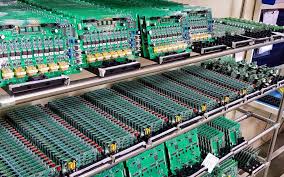
What Measures Are Taken to Prevent Solder Shorts During Board Assembly?
Insufficient solder leads to a weak or incomplete connection and increases the risk of shorting and cracking. It can also lead to an unstable and unpredictable design. Using a reflow oven with appropriate temperature profiles and using the right pre-heat is one way to reduce this defect.
If the residual flux is not properly cleaned after soldering, it can leave a dark spot on the surface of the board. It can also be a source of contamination, which can affect performance and reliability. Successful companies keep a stock of the proper cleaning solvents on hand to deal with these issues quickly and efficiently.
The final defect is the solder starved joint. This is when there is insufficient solder to provide a strong and robust connection. Insufficient solder can also lead to intermittent connections, which will be a major issue for long term reliability. Insufficient solder can also cause the joints to fail due to a lack of mechanical strength. This can be overcome by reworking the joint and applying additional solder. It is also important to use high quality solder paste to reduce the likelihood of this error.
Electronic components are sensitive to temperature fluctuations, and improper temperature control can lead to various issues: Rapid temperature changes can induce thermal stress in components, leading to cracks, delamination, or other physical damage. This is particularly critical during soldering, where components experience significant temperature shifts. Excessive heat can cause the PCB to warp or bow, making it difficult to place and solder components accurately.